Video model · free · no sign-up
Luma
prompt generator.
Luma Dream Machine follows natural, descriptive language: a paragraph that reads like you’re describing the shot to a cinematographer, with the camera movement stated plainly.
The generator writes that paragraph from your selections — style, subject, action, scene, light and camera — and rephrases exclusions positively, since there’s no negative prompt.
Example outputNight selfie clip
Horizontal 16:9 nighttime glamour selfie video. An original fictional adult woman in her mid-20s sits in a dark upscale evening interior at night. She has very long deep chocolate brown hair, smooth glossy blowout with loose waves, warm medium tan skin, warm brown eyes, glossy nude-rose lips. She wears a rich wine red deep plunging sleeveless evening dress and a delicate short tennis-chain necklace. She slowly tilts her head so her hair falls over one shoulder, brushes a strand behind her ear, then looks straight into the lens with a confident, faint smile. Throughout: natural blinking and breathing, her hair shifting gently with each movement. Camera movement: phone held at arm's length, slight natural sway, tight upper-body framing, slightly low. Low-key warm ambient lighting, key light from front-left and slightly below, approximately 2500-3200K warm amber, near-black background. Extreme photorealism, luxury social-media portrait, deep burgundy, warm tan and dark chocolate brown palette, sharpest on eyes and face, slow and calm pacing. Live-action, photographic footage, not animation or CGI. Natural skin texture with visible pores. A clean frame with no text, logos or watermarks. Smooth, stable motion with consistent faces and anatomy.
190 wordsaspect_ratio: 16:9duration: 5 seconds
How to write better Luma prompts.
01
Write it like a scene description
Full sentences about who, where and what happens work better than a keyword list.
02
Spell out the camera
Say “the camera slowly orbits the subject” rather than hoping the motion is implied.
03
Set the mood with light
Light and color grading carry most of the atmosphere; be specific about both.
Luma examples.
All examples →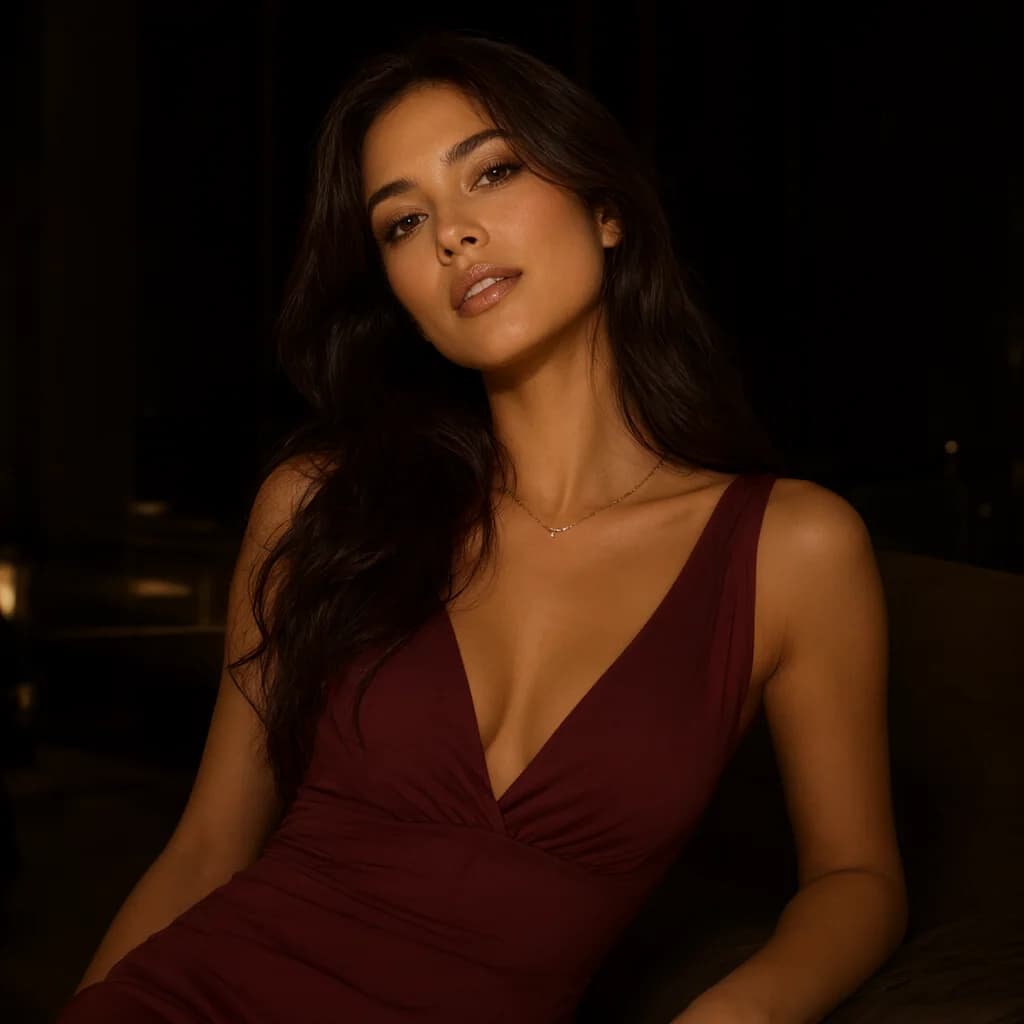
Luma FAQ.
Does Luma support negative prompts?+–
No, so the generator folds exclusions into the positive description.
Can I start from an image?+–
Yes. Use the image in Luma and keep the prompt focused on the motion and the action.